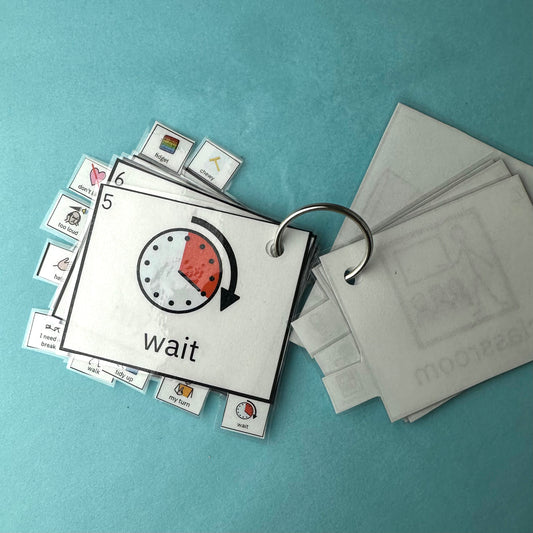
My Core Word Programme supports literacy development in a way that aligns with how many Gestalt Language Processors and autistic children naturally learn. Using engaging games, playful activities, sensory stories, and interactive experiences, we model and reinforce these meaningful core words, helping learners build the confidence and skills they need to communicate effectively.
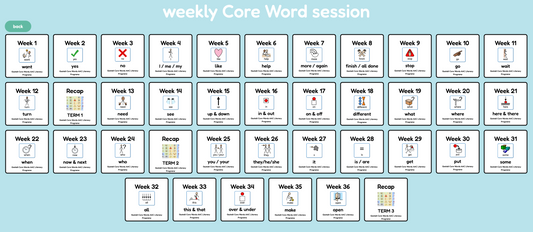
If you’ve been continuing your journey with the Core Word Programme, you may now be reaching the Term 2 Recap - well done! This is an important milestone. Over the past term, we’ve continued to build on those strong foundations, introducing and practising a new set of functional words that support deeper engagement, growing independence, and more confident communication.

Below is a quick refresher on each of our focus words, along with links to revisit previous blogs and videos. You can view the Term 1 recap blog post here.
13. Need

A powerful word, "Need" helps our learners to express wants, preferences, and important messages.
Read the full blog post here, and watch the Youtube video & RISE session by clicking the thumbnails below.


14. See

“See” supports early observation skills, encourages joint attention, and invites children to communicate about what is interesting or important to them
Read the full blog post here, and watch the Youtube video & RISE session by clicking the thumbnails below.


15. Up & Down

Whether a student is using AAC, gestures, sound buttons, words, or a mix of communication forms, “up” and “down” are meaningful, motivating, and fun to practice.
Read the full blog post here, and watch the Youtube video & RISE session by clicking the thumbnails below.


16. In & Out

These simple words help students describe location, movement, and participation.
Read the full blog post here, and watch the Youtube video & RISE session by clicking the thumbnails below.


17. On & Off

These useful small words help our students describe position, control actions, and take part in everyday routines across the day. "On" and "Off" are highly motivating because students can often see immediate results when they use them.
Read the full blog post here, and watch the Youtube video & RISE session by clicking the thumbnails below.


18. Different & Same

Here, we focused on the core words "Different" and "Same". The benefits of learning these words are to advocate for what you need even if you don’t know the name of the item, autistic learners are so often great at noticing patterns - this celebrates the skill of sorting and noticing patterns, offering learners the vocabulary to share these observations with others.
Read the full blog post here and watch the Youtube video & RISE session by clicking the thumbnails below.


19. What

“What” empowers learners to ask questions about their environment, express curiosity, and take an active role in communication, giving them a simple but powerful tool to better understand and be understood.
Read the full blog post here and watch the Youtube video & RISE session by clicking the thumbnails below.


20. Where

“Where” helps learners make sense of their environment, supports problem-solving, and gives them the language to seek help, share attention, and navigate daily routines with greater confidence.
Read the full blog post here and watch the Youtube video & RISE session by clicking the thumbnails below.


21. Here & There

“Here” and “there” help our learners to communicate about locations - whether they are requesting an item, directing someone’s attention, or indicating where they would like to be.
Read the full blog post here and watch the Youtube video & RISE session by clicking the thumbnails below. 

22. When

“When” is an important word that helps our learners begin to understand and communicate about time. It supports them to ask questions, anticipate what is happening next, and make sense of daily routines and events.
Read the full blog post here and watch the Youtube video & RISE session by clicking the thumbnails below.


23. Now & Next

These important words help our learners understand what is happening right "now" and what will happen "next". They support children in making sense of routines, transitions, and sequences throughout the day.
Read the full blog post here and watch the Youtube video & RISE session by clicking the thumbnails below.


24. Who

“Who” is an important question word that can help children learn about people and identify others around them.
Read the full blog post here and watch the Youtube video & RISE session by clicking the thumbnails below.


What's next?
Now that you’ve completed Term 2, this is a perfect time to review, revisit favourite activities, and strengthen understanding before moving on to Term 3. Core words grow with practice, repetition, and modelling in routines.
I can't wait to get started on Term 3 with you all!