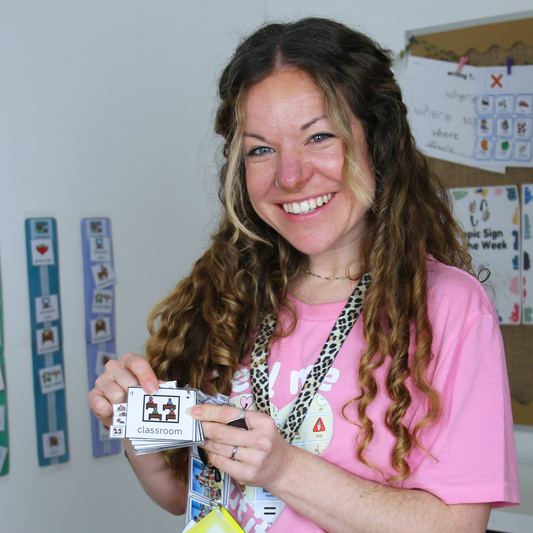
My Core Word Programme is designed to teach literacy in a way that suits how many Gestalt Language Processors and Autistic children learn. Through fun and interactive games, play ideas, sensory stories and activities, we can model and teach these powerful words, and give our learners the tools that they need to express themselves.
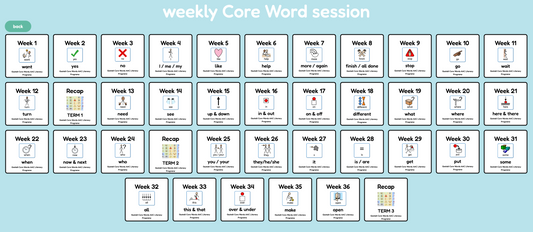
If you've been following along with my Core Word Programme, you may now be at the Term 1 Recap stage, congratulations! This is a huge milestone. Over the past weeks, we’ve explored 12 powerful, practical words that help build engagement, independence, and communication confidence.

Below is a quick refresher on each of our focus words, along with links to revisit previous blogs and videos.
1. Want

'Want' - a fundamental word allowing for autonomy and expression. Read the full blog post here, and watch the Youtube video & RISE session by clicking the thumbnails below.


2. Yes

Whether giving consent, sharing interests and tastes, or confirming that something is understood, 'yes' is a pivotal word for our learners to access for autonomy and decision making.
Read the full blog post here, and watch the Youtube video & RISE session by clicking the thumbnails below.


3. No

Whether refusing consent, sharing dislikes, navigating autonomy or simply enjoying cause and effect "oh no!" activities, 'no' is a pivotal word for our learners to access for autonomy and decision making.
Read the full blog post here, and watch the Youtube video & RISE session by clicking the thumbnails below.

 4. I /Me /My
 The first step toward identity, ownership, and expressing personal needs. You will have already naturally covered “I” in previous weeks, such as “I want” in week 1. It felt important to ensure our learners, especially those gestalt language processors, heard “I” also used on its own and in different contexts, so they can begin to start the process of mitigating their learned phrases.
Read the full blog post here, and watch the Youtube video & RISE session by clicking the thumbnails below.


5. Like

This word is important for developing autonomy and expressing opinions. It can also be combined with previously learned words, such as ‘yes’ and ‘no’, to help learners share their thoughts more fully.
Read the full blog post here, and watch the Youtube video & RISE session by clicking the thumbnails below.


6. Help

This is a powerful word that gives our children a way to ask for support, show kindness, and connect with others. It can be useful during daily routines, play and learning moments, and encourages interaction and teamwork.
Read the full blog post here and watch the Youtube video & RISE session by clicking the thumbnails below.


7. More/ Again

These words are perfect for building engagement because they naturally connect to things our children enjoy - favourite activities, songs, games, and even snacks!
The words can be used during play, routines and social exchanges, and help children to request, participate and stay involved in interactions. Both words help to encourage communication during fun and rewarding moments.
Read the full blog post here and watch the Youtube video & RISE session by clicking the thumbnails below.


8. Finish/All done

"Finish" and "All done" help children communicate that something is over, they want to stop, or they’re ready to move on - all essential parts of expressing choice and control. They can build independence and self-advocacy in our learners, and support transitions between tasks and activities.
Read the full blog post here and watch the Youtube video & RISE session by clicking the thumbnails below.


9. Stop

This week’s focus word is “stop” - a short but powerful word that helps children take control, express their boundaries, and guide interactions. It supports safety and self-advocacy (“Stop!” when something feels uncomfortable), allows children to express when they want something to pause or end, and can also be used playfully in games and songs, making it a fun word to practise!
Read the full blog post here and watch the Youtube video & RISE session by clicking the thumbnails below.

10. Go

A powerful word that helps children to take part in play, routines and communication, it is also fun and motivating. This word links easily to previous core words such as stop, more, finish and again, and together they’re great for building up our learners’ communication.
Read the full blog post here and watch the Youtube video & RISE session by clicking the thumbnails below.


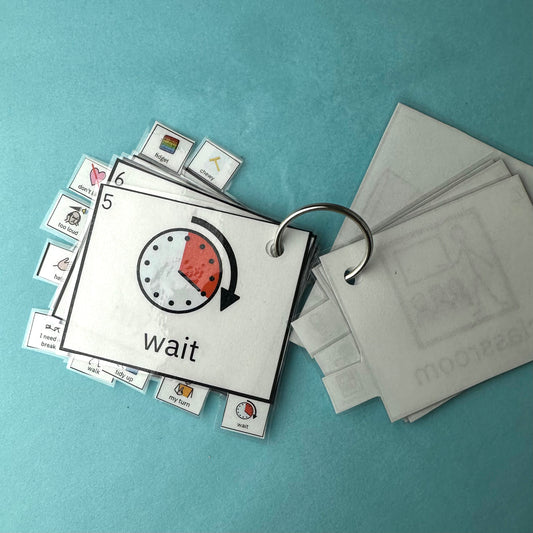
11. Wait

A small but mighty word that helps build patience, self-control, and understanding of turn-taking - all key parts of social communication. This important word helps children to learn about routines, time and order, supports transitions and shared activity, and builds interaction skills.
Read the full blog post here and watch the Youtube video & RISE session by clicking the thumbnails below.


12. Turn

It’s a powerful word that supports sharing, cooperation, and meaningful interaction during both play and our daily routines. This useful word helps our learners understand how to participate in joint activities, follow social rules, and recognise the rhythm of back and forth exchanges. It can build confidence in communication, encourage participation with peers, and creates opportunities for connection throughout the day.
Read the full blog post here and watch the Youtube video & RISE session by clicking the thumbnails below.


What's next?
Now that you’ve completed Term 1, this is a perfect time to review, revisit favourite activities, and strengthen understanding before moving on to Term 2. Core words grow with practice, repetition, and modelling in routines.
I can't wait to get started on Term 2 with you all!