A new week means a new Core Word in my sensory classroom.
If you're new to my Core Word Programme, it was designed to teach literacy in a way that suits how many Gestalt Language Processors and Autistic children learn.

The sessions are delivered in nine fun sections, which can be covered all at once or separately, depending on your schedule and the needs of your learners. Each weekly session includes play ideas, sensory story suggestions, phrase examples, interactive games and more.
The sessions are adaptable to any communication method or classroom need, so your learners can get the most from the content. The programme offers different signed and symbol languages, so whether you use Boardmaker, LAMP, Symbolstix or Widgit, ASL, AUSLAN, BSL, NZSL, it is suitable for all.
It is also suited to specific AAC apps such as Widgit Go, Smartbox GRID, Proloquo, Proloquo2go, TouchChat, Lamp: words for life and TD SNAP. It is not essential you have high tech AAC to use the core word programme, but does work well alongside if you already use it.
You get access to all symbol languages when you sign up, so even if you have a variety of different systems or AAC used in your classroom, you can meet all needs.
*if you would like a different combination of signed languages/symbol languages that isn't available please let us know and we will see what we can do

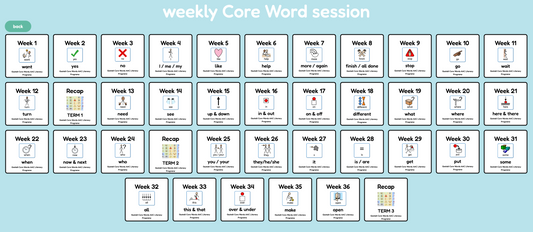
Week 25: You
This week our important word in my sensory classroom is going to be "You."
“You” is a word that helps us talk directly to others. It is used to get someone’s attention, give instructions, make choices, and build social connections. Learning to use “you” supports communication in everyday interactions and helps children become more aware of others around them.
*The links below are affiliate links, which means I get paid a commission for sharing. It doesn't cost you any more and helps support sharing so much information for free on my blog and social media accounts. Win-Win. Thank you!
 Click the image above to watch my core word "You" session in video format and learn how I would run the programme this week.
When starting on a new core word, the activities are split into saying, finding, hearing, watching, playing, reading, learning, practising and writing that word.


My learners start by saying it. Depending on their preferred methods of communication, this could be finding it on AAC (high-tech or low-tech), learning sign language, using sound buttons or any other method of communication.
I bring up this section nice and big on the whiteboard with the whole team gathered around and we all practice saying it, signing it, pressing a sound button to say it and watching the signing video. We repeat this each morning as part of the introduction to our day.


Next, we find the new core word on our AAC core board. This can be done either on the printable core boards provided or your own high-tech AAC apps if you have one. This supports the learners to navigate their AAC, as well as giving the adults confidence to use AAC themselves. By building up navigation week on week, it doesn't become overwhelming.

We always follow the "Say it" section with the "find it" section in my classroom, as they are so interlinked. I show the coreboard on the whiteboard and I choose a learner to try to find the core word on the board. I press "reveal" and the programme will circle the core word of the week. Next, everybody else tries to find it on their low tech printed core boards that match, adults included.
If a child has their own high tech AAC app, this is a fantastic opportunity to practice navigating to find the new core word. This could even replace this section in the core word programme if you just want to focus on the layout and look of your talking app and not confuse with a different layout, as shown in the programme.

After saying and finding it, we move on to a favourite activity in my classroom - hearing the core word through music clips. My pupils love coming up to my whiteboard and selecting which song they wish to listen to. It gives them ownership of their learning, and they are far more engaged and interested this way.
As many are gestalt language processors, it is also crucial for learning that they hear the phrase or new core word regularly in an engaging and motivating way. By watching the clips our learners can build context around the new core word. It gives it purpose and meaning. It tells them 'this is something that could be useful to me', and therefore they will be more likely to remember it and use it.

 Whilst watching these sections, depending on the type of video, sometimes we use it as an opportunity for a movement break. Alternatively all of the adults use it as an opportunity to keep modelling the wide range of communication methods we are promoting in our room, by "saying" it whenever they hear it in the song or clip.
I tried hard to find a range of songs and TV clips to suit all interests and ages. If you think of any more that you feel are better than mine, please let me know!!!

Next is "Watch it" - longer clips to choose from. These clips can be played on iPads or interactive whiteboards. The best thing about my programme is there are never any annoying YouTube adverts before the song or clips! This is a fab way of embedding the core word whilst the children are doing an activity that they enjoy. In my classroom we rarely get time to engage in this section of the programme, but it is nice to have an extra buffer activity to fall back on if needed.


With my learners this week, I'll be reading 'Find Your Happy' by Emily Coxhead, and 'Bug Bear' by Patricia Hegarty. Both are fun, colourful and engaging books.
As always, there are links to videos of someone reading the books aloud included in the programme, so that your learners can enjoy it even if you don't have a copy!
Each weekly core word session includes story suggestions. These stories tend to be better for autistic and Gestalt Language Processor learners as they can hold onto the meaning of the whole phrases and use them in other contexts. Compared to traditional stories, which focus on abstract language and can be overwhelming, sensory stories provide concrete sensory experiences which may be better suited to our sensory-led children. Through stories, we can support learners to build understanding and context to put with the language they are hearing.

We then learn through downloadable weekly play ideas that reinforce our core word. These are child led play activities that help embed the core word understanding, and are presented in a fun and motivating way. Additionally, they are divided into different cognitive age groups, so that whichever stage your learners are working, there are suggestions and specific objectives for them.
I have developed a play based therapy system, called RISE therapy. I have included core word- related play session ideas that you can slot in within this section also.
Click the image below for my "Week 25: 'You' RISE session.
 Notice how I model the core word using speech and AAC, my team will also be modelling using alternate methods, i.e. signing, high tech AAC, sound buttons, symbols etc.

Here is how I am planning for the session to go:
Step 1: Regulation
First, we want to regulate and reconnect with our learners! I offer a buffet of tools including puppets, mirrors and scarfs, while modelling the core word "you".
 Step 2: Invitation
To spark curiosity, I lay out photos of classmates or characters, squirting shaving foam to cover their faces. This leads nicely onto the next step where we can model "where are you?"

 Step 3: Shared Experience
Once everyone is gathered and interested, we can take turns finding our faces and the characters under the shaving foam. A great fun and sensory way to model "you".

Step 4: Ending
To finish, I like to play the Tuff Tray tidying up song to queue the learners into the end of a loved activity. I offer everyone a sponge and water and we can clean up the mess together!
 Here is a link to my Sensory Circuit songs which can be used in this section. *I have more “tidy up” style songs on their own album coming soon!
*At any step my learners will have a choice to join or not join. Each step is important and they can stay put at any part where they feel most comfortable, if they are not ready to move on to the next section. This may change week on week.
I’d love to know if you give this session a try - feel free to share how it goes! RiseTherapySessions.com is now live and offers information posters, planning templates, and training. Training options include level 1 training which is a one hour pre-recorded course that you can start at any time, as well as set LIVE virtual level 2 courses throughout the year, which run over 4 weeks.
You’re also welcome to join our RISE Therapy Ideas Facebook group to share ideas, ask questions, and celebrate your wins.
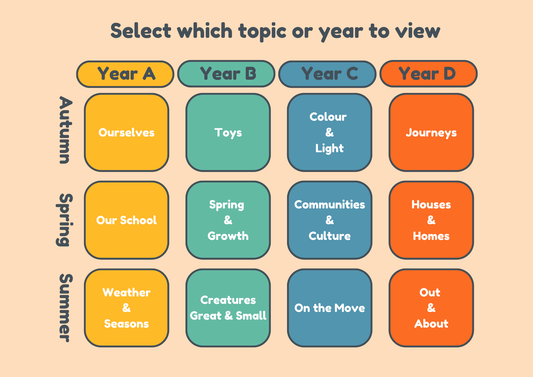
Separate from the Core Word Programme, you can also get four years' worth of fun learning through play ideas, linked to twelve popular topics, within my Sensory Curriculum. You’ll find more play ideas here.

Next, I've got teaching table task planning ideas for our practise it section. There are differentiated table tasks, so that wherever your learners are working, there will be something for them. This is a more 1:1* intervention teaching opportunity for the teaching staff to continue to work on the core word understanding in a more individualised way. This is also a great opportunity to assess individual understanding.


Lastly, we have the write it section with the included writing tasks. These can be completed on iPads, on whiteboards, or printed out for mark-making. Again, there are differentiated options depending on the stage that your learners are working at, and these can be completed as a group, modelling turn-taking, or individually.


Core word community
In this section I will be sharing Core Word Programme users great achievements, reviews and celebrations! To join in, please use #CoreWordOfTheWeek or post reviews/achievements/photos etc the Core Word Programme Users Facebook group.
Below we have a beautiful example of a pre-verbal child engaging in the RISE sessions. Please keep your progress updates, wins and celebrations coming, we really do love to see them.

I am so enjoying seeing this beautiful community continue to support, celebrate and inspire each other ♥️
Not a core word programme user yet?
If you think your learners would benefit from learning language this way, we would love to have you join! You can start at any time and work through the sessions at your own pace, and there is a thriving private Facebook group where you can find support, tips, ideas, and community.
Check out my other blog posts here or my TikTok, YouTube, Facebook or Instagram for lots more Core Word content. I also have a podcast that you can listen to here. You can buy the Core Word Programme by tapping the image below. To access the free trial, click here.