When a child with a Pathological Demand Avoidance (PDA) profile walks into your classroom, you might first notice avoidance behaviours, big emotions, or unexpected resistance to everyday requests. What’s beneath the surface, however, is far more complex—and with the right understanding, connection, and strategy, we can create a space where these learners feel safe, respected, and able to thrive.
What is PDA?
PDA is a profile, characterised by an extreme avoidance of everyday demands and expectations, driven by high anxiety. These learners are often misunderstood because they may seem oppositional or controlling, but the root cause is a need to feel safe and in control of their environment.
You may hear or see:
-
“No!” and avoidance, even to enjoyable activities
-
“You’re not the boss of me” or refusal to comply
-
Elaborate role play to mask anxiety
-
Sudden shutdowns, meltdowns or withdrawal
The goal isn’t to “fix” this behaviour—it’s to understand the communication behind it, and respond with empathy and flexibility.
Introducing the PANDA Approach
One of the most effective ways to support PDA learners is the PANDA approach, developed by the PDA Society. It offers a compassionate, person-centred framework that helps both educators and families reframe their mindset.

Here’s how PANDA breaks down:
-
P – Pick your battles: Focus only on what’s essential. Let go of non-urgent demands and work together on priorities.
-
A – Anxiety management: Recognise that behaviour is driven by anxiety. Keep environments calm, predictable, and low-demand.
-
N – Negotiation and collaboration: Offer choices, involve the learner in decisions, and co-create plans. “Let’s make a plan together” works better than “You must do this now.”
-
D – Disguise and manage demands: Soften instructions, embed them in play, use humour or indirect language. For example, “I wonder who can help me with this” instead of “Do this now.”
-
A – Adaptation: Flexibility is key. Traditional structure and rewards may fail. Adapt your expectations and meet the child where they are, not where you think they should be.
Actionable Tips for Teachers Supporting PDA Profiles
1. Let go of control to gain cooperation
Children with PDA need to feel autonomous. Instead of issuing instructions, frame them as invitations, options, or games. Avoid power struggles—they escalate anxiety quickly.
Try:
- “Would you like to start with this or that?”
- “I could really use your help with this puzzle.”
- “Shall we do this now or in five minutes?”
2. Reduce perceived demands
Even praise can feel like pressure. Be mindful of tone, body language, and the number of expectations you’re placing—no matter how small they seem.
Use:
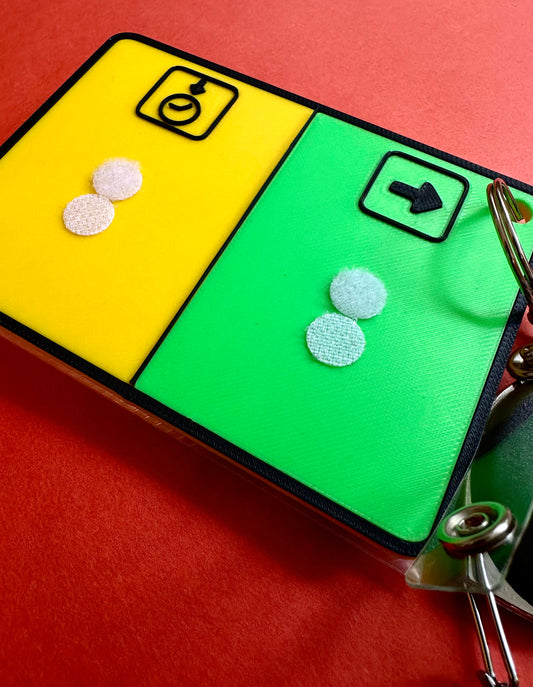
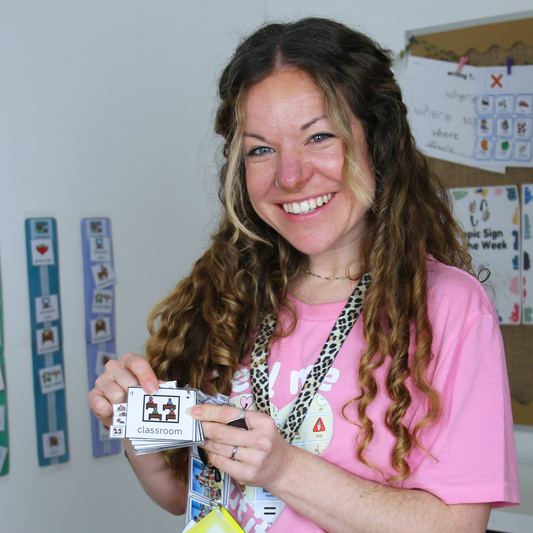
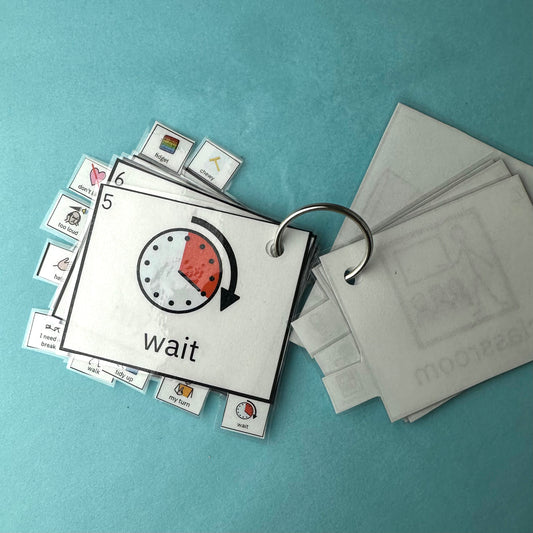
- Visual timetables with ‘choice’ icons, or maybe they build their own schedule from given options
- Role play or puppet-led tasks
- Activities led by special interests
- Offer written, drawn or symbol instructions (non-verbally shown or just simply left in viewable proximity)
3. Always co-regulate before problem-solving
If the learner is upset, don’t rush to “fix” the behaviour. Validate feelings, stay regulated yourself, and wait until they’re ready to reflect.
Say:
- “I can see that was really hard.”
- “Let’s take a break together and we’ll think about what to do next.”
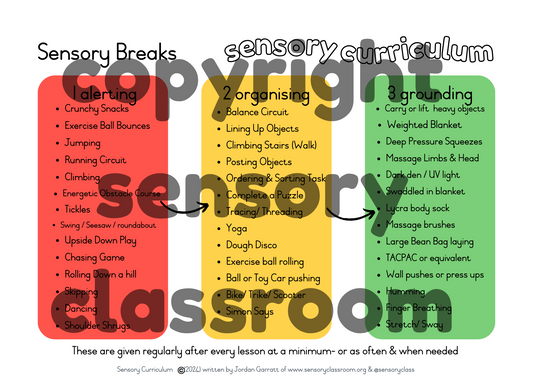
- Model meeting your own sensory regulation and anxiety needs without the expectation that they will join you
4. Keep a consistent adult they can trust
Relationships are everything. When learners feel connected and believed, they’ll begin to trust that school can be a safe space. One key adult—without judgment—can make all the difference.
Listen to More:
Podcast Episode 23 – PDA Parenting and Schooling
For deeper insight, real-world stories, and expert perspectives, tune in to Episode 23 of our podcast:
Watch on YouTube – PDA Parenting and Schooling
In this episode, we explore:
- Why traditional behaviour strategies often fail
- What PDA looks like in the classroom and at home
- How the PANDA approach can be life-changing for learners and educators
Final Thought: Connection Over Compliance
PDA isn’t about being difficult. It’s about a child doing their best to cope in a world that feels overwhelming. The more we choose collaboration over control, the more we show these learners that they are safe—and that’s where the real learning begins.
For printable visuals, sensory-friendly planning tools, and symbol-supported support plans, all with the aim to ease anxiety and support learning, browse our full range of classroom resources here.
And if you’re looking for support tailoring strategies to your learner, consider booking a virtual consultancy session with me.
References:
Newson, E., Le Marechal, K., & David, C. (2003). Pathological demand avoidance syndrome: A necessary distinction within the pervasive developmental disorders. Archives of Disease in Childhood, 88(7), 595–600.
Original paper describing PDA as a distinct profile within the autism spectrum, outlining key features such as demand avoidance, social strategies, and anxiety.
Newson, E. (1989). The demand avoidant syndrome: A variant of autism. Unpublished clinical observations.
Early clinical descriptions that formed the foundation for later PDA conceptualisation.
O’Nions, E., Gould, J., Christie, P., Viding, E., & Happé, F. (2014). Identifying features of ‘pathological demand avoidance’ using the Diagnostic Interview for Social and Communication Disorders (DISCO). European Child & Adolescent Psychiatry, 23(5), 377–387.
Empirical study identifying behavioural features associated with PDA traits within autistic populations.
O’Nions, E., Happé, F., Evers, K., Boonen, H., & Noens, I. (2018). How do parents manage extreme demand avoidance in children with autism spectrum disorder? Journal of Autism and Developmental Disorders, 48(6), 2264–2276.
Explores parent strategies and highlights the role of anxiety-based, indirect, and low-demand approaches.
Christie, P., Duncan, M., Fidler, R., & Healy, Z. (2012). Understanding Pathological Demand Avoidance Syndrome in Children. Jessica Kingsley Publishers.
Widely used practitioner text outlining characteristics and support strategies, particularly in educational contexts.
Eaton, J., & Weaver, K. (2020). Pathological Demand Avoidance: Autism Spectrum Disorder or Separate Entity? In Autism: Paradigms, Recent Research and Clinical Applications.
Explores conceptual debates surrounding PDA’s classification.
Green, J., Absoud, M., Grahame, V., Malone, C., Russell, G., & Le Couteur, A. (2018). Pathological demand avoidance: Symptoms but not a syndrome. The Lancet Child & Adolescent Health, 2(6), 455–464.
High-profile critique arguing PDA describes a cluster of behaviours rather than a distinct diagnostic syndrome.
Woods, R. (2019). Demand avoidance, autism and anxiety: A lived experience perspective. Autism Policy & Practice.
Autistic-led perspective linking demand avoidance to anxiety, trauma, and loss of autonomy.
Fidler, R., & Christie, P. (2019). Collaborative approaches to supporting children with demand avoidant profiles. Educational Psychology in Practice.
Focuses on relationship-based, flexible, and autonomy-supportive approaches.
Russell, G., et al. (2022). Exploring demand avoidance in autistic children: Associations with anxiety and intolerance of uncertainty. Autism.
Links demand avoidance behaviours to anxiety and uncertainty rather than oppositionality.
Moore, A. (2021). PDA, anxiety and control: Reframing demand avoidance. British Journal of Special Education.
Educational perspective reframing PDA as a stress response requiring environmental adaptation.
Lidstone, J., et al. (2014). Executive functioning and anxiety in autism spectrum disorder. Journal of Autism and Developmental Disorders.
Frequently cited to support understanding of control, predictability, and demand sensitivity.
Guldberg, K. (2010). Educating children on the autism spectrum: Preconditions for inclusion and learning. European Journal of Special Needs Education.
Supports low-arousal, flexible, relationship-led approaches relevant to PDA-informed support.
Low Arousal Approaches (McDonnell, A., 2010). Managing Aggressive Behaviour in Care Settings: Understanding and Applying Low Arousal Approaches. Wiley-Blackwell.
Not PDA-specific but often referenced in PDA support due to its emphasis on reducing perceived demands and stress.
National Autistic Society (UK). (2021). Demand avoidance.
Professional guidance acknowledging PDA as a profile within autism and offering practical support strategies.